
Donec efficitur, ligula ut lacinia
viverra, lorem lacus.
Donec efficitur, ligula ut lacinia
viverra, lorem lacus.

Heimtextil 2026 put craft and texture on the stand. On a real sofa, matte velvet and bouclé rewrite the cutting plan, the seams and the rub-count sheet. What a maker actually checks.
For readers assessing Italian upholstered furniture, the practical question is how the idea performs in a real room, not only how it photographs. Heimtextil ran in Frankfurt from 13 to 16 January 2026 with 3,000 exhibitors from 66 countries, and its Trend Arena carried a title that reads like an instruction: “Craft is a verb.” One of the six Heimtextil Trends 26/27 behind it, Crafted Irregularity, put knots, uneven dyeing and visible seams on the stand instead of hiding them. Six months on, the two cloths carrying that idea into living rooms are matte velvet and bouclé. Both look simple in a photograph. Both change what a workshop has to do to the piece underneath.
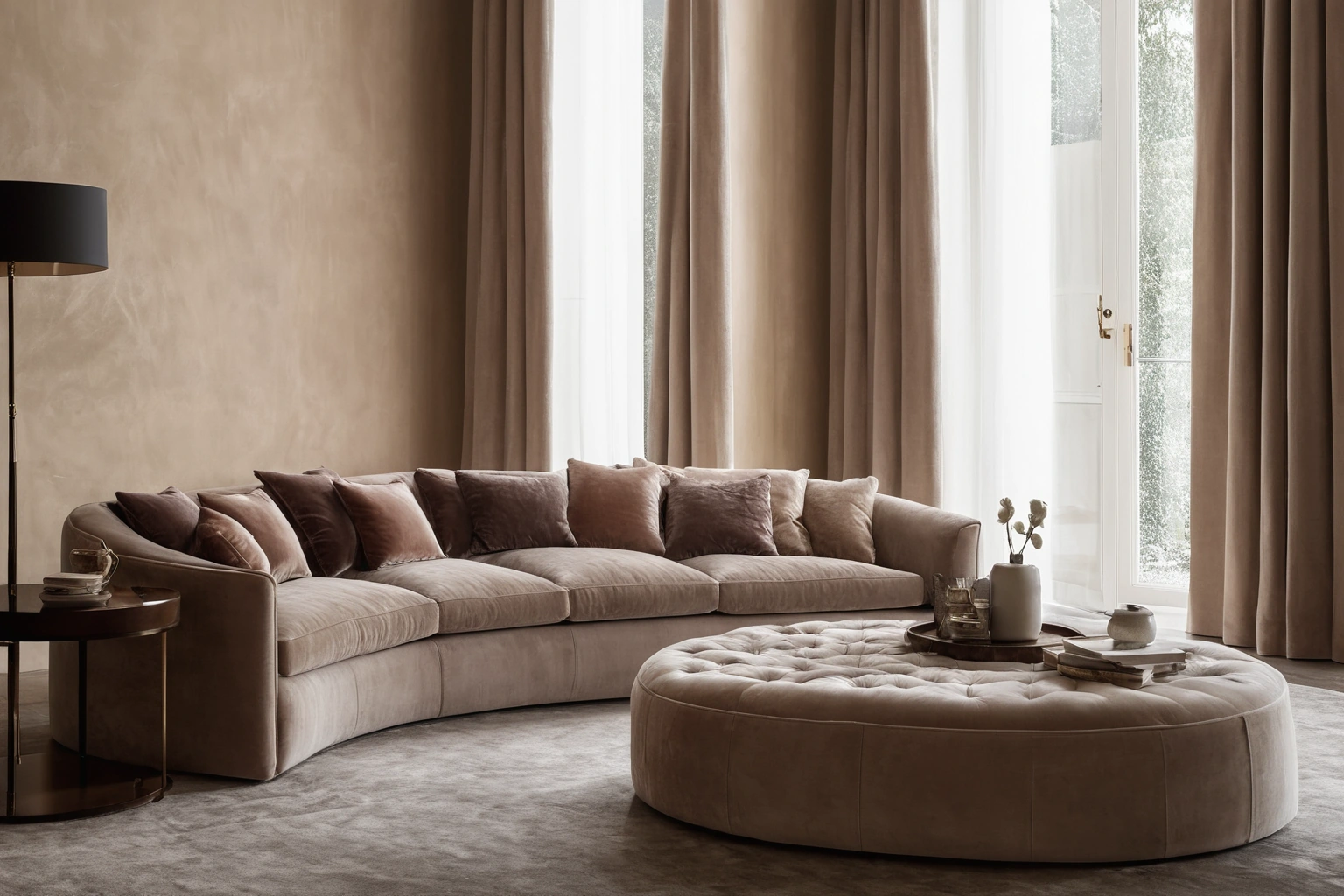
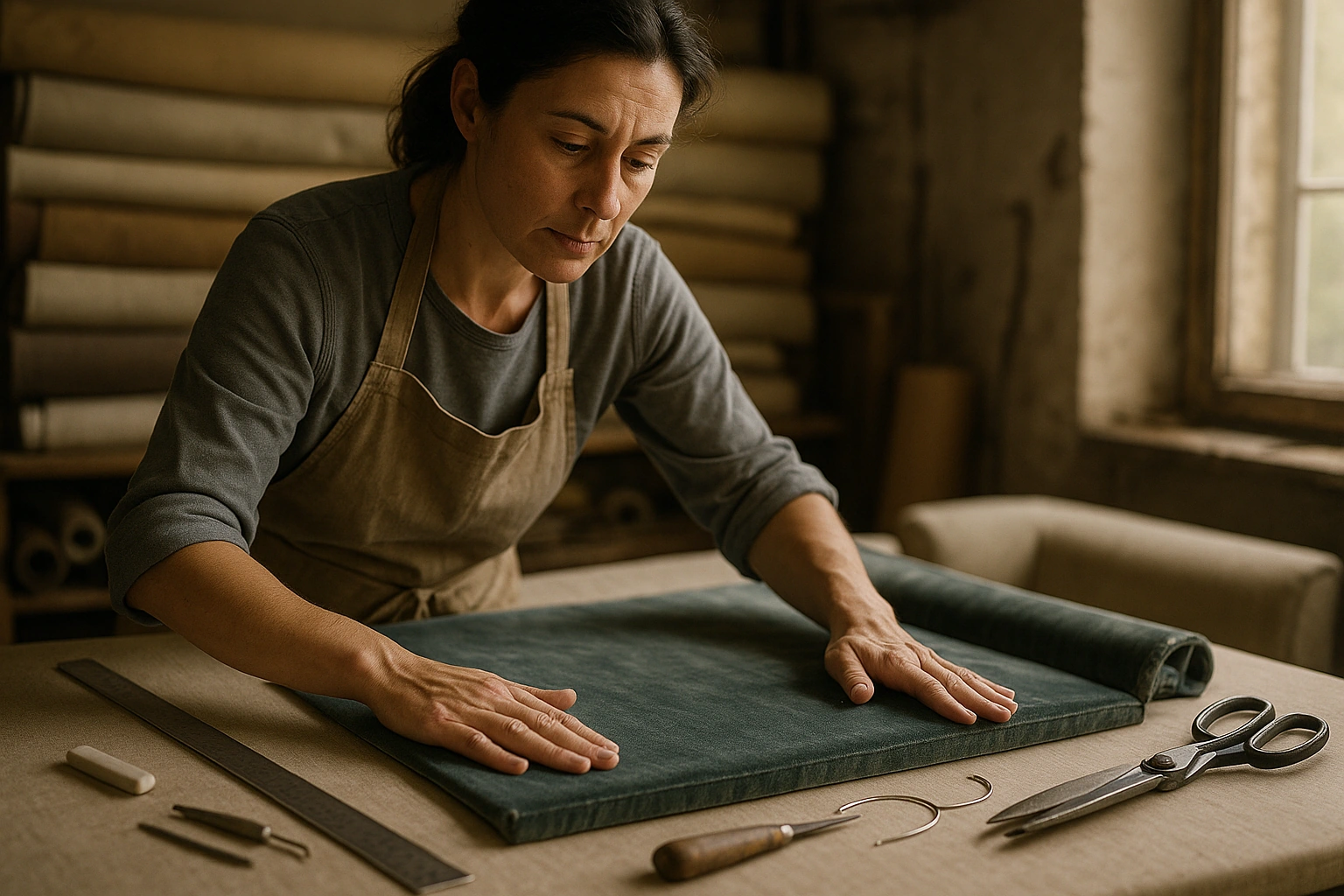
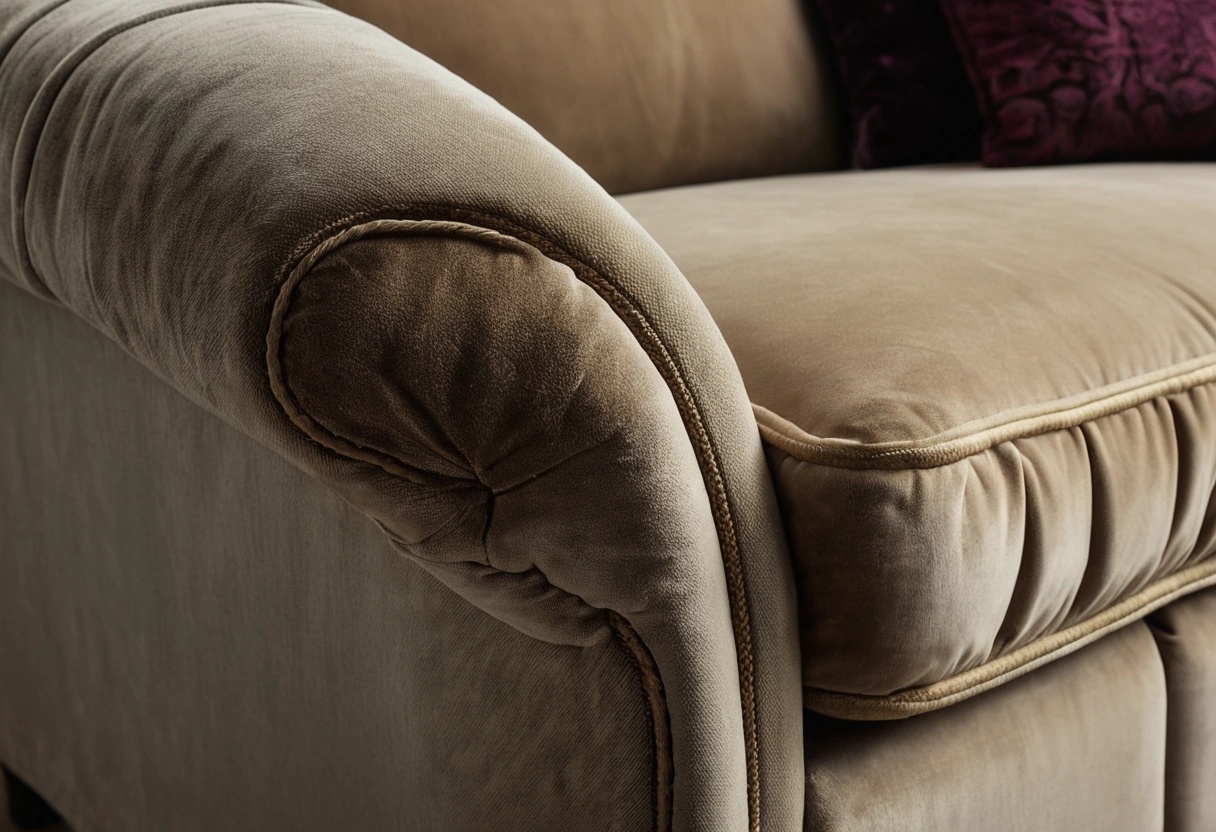
Velvet is a construction, not a finish: two thicknesses woven at once, held apart by an extra warp yarn, then cut apart so the severed ends stand up as pile. The pile leans, and the direction it leans is the nap. Cut pile up and the colour reads deeper; cut pile down and the same dye lot reads lighter, because the fibres either bounce light back at the eye or turn their own shadow towards it. A velvet sofa photographed from the left and from the right can look like two pieces of furniture, and clients report this as a fault roughly as often as it is one. Hence the rule: every panel is cut with the nap the same way, conventionally down the inside back and down the seat. Reverse one panel and it sits in the room as a slightly different colour for the life of the piece. Napped cloth costs more yardage too, because panels cannot be nested head to toe across the roll: half would come out the wrong shade.
The move to matte is a maintenance decision wearing the clothes of a taste decision. A high-lustre pile returns light in a narrow, coherent sheet, so anything disturbing it breaks that sheet and shows as a bright or dark patch: a palm print, a knee, the path an animal takes across a seat. A matte pile scatters light in more directions, so the same disturbance changes less. Matte does not stop the pile crushing. It stops you reading the crush from the doorway, which for a living-room sofa is most of the complaint. Mohair answers from the other side: the resilient fibre of the Angora goat springs back mechanically instead of hiding the mark optically, the more expensive answer, and why mohair velvet turns up on pieces meant to be sat in. A related practical reference is available in Design Services.
Every fabric decision is a frame decision that has not happened yet. The cloth arrives last and dictates backwards: the seam plan, the radius, the fill, the yardage.
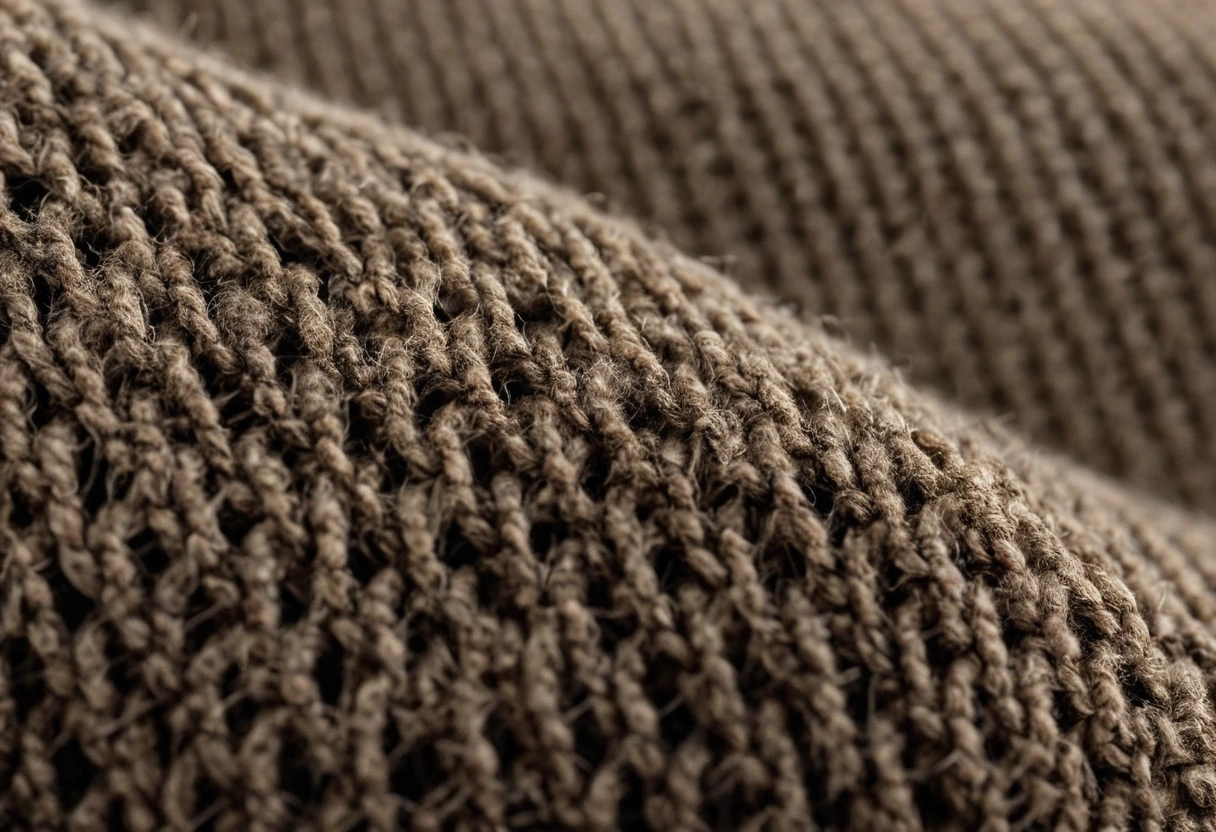
Bouclé is a yarn before it is a fabric: two strands spun at different tensions, the loose one throwing loops while the other anchors them. That structure is the entire appeal and the entire liability, because a loop is a projection with a gap underneath. A claw, a zip or a watch clasp lifts the loop rather than sliding over it, and a pulled loop does not rub back in; it has to be worked back with a needle, if at all. The loft also reorganises the build: it fights a tight radius, so a curve a flat weave would take cleanly needs a larger radius or a seam where the designer wanted none, and a lofty yarn compresses unevenly under a needle, which is where a welt earns its keep. Open weaves also let yarns migrate when a seam is pulled, which the trade calls seam slippage and the standards bodies test directly.
Upholstery is sold on rub counts, the most misquoted numbers in the trade. There are two tests and they are not interchangeable. The Wyzenbeek method, ASTM D4157, rubs a clamped specimen back and forth in one line against a cotton duck abradant, counting double rubs. The Martindale method, ASTM D4966 in the United States and EN ISO 12947 in Europe, mounts the fabric flat and rubs it in an elliptical path against worsted wool under 12 kPa, counting cycles. Different motion, different abradant, different load. The Association for Contract Textiles publishes minimums for both and states flatly that there is no correlation between Wyzenbeek and Martindale results. Neither figure converts into the other, and a conversion chart is selling something. This decision can also be compared with the site’s guide to Design Gallery.
| Category | Wyzenbeek (ASTM D4157) | Martindale (ASTM D4966, 12 kPa) |
|---|---|---|
| Low traffic / private spaces | 15,000 double rubs | 20,000 cycles |
| High traffic / public spaces | 30,000 double rubs | 40,000 cycles |
Two things follow. A private living room is the 15,000 double rub category; ACT’s own examples of installations needing 30,000 are single-shift corporate offices, hotel rooms, conference rooms and dining areas. And the enormous numbers are close to meaningless: ACT requires licensees publishing results above 100,000 double rubs to state that such results have not been shown to indicate increased fabric lifespan. A 200,000 double rub velvet is not twice the sofa. The wider project context is available from Birdsong Design.
ACT tests the rest separately, and those figures are the ones a maker reads first. Seam slippage under ASTM D4034 wants 25 pounds minimum in warp and weft, breaking strength under ASTM D5034 wants 50 pounds, pilling wants Class 3. A cloth that passes abrasion and fails seam slippage will not wear out. It will open along a seam, a different and more annoying death.
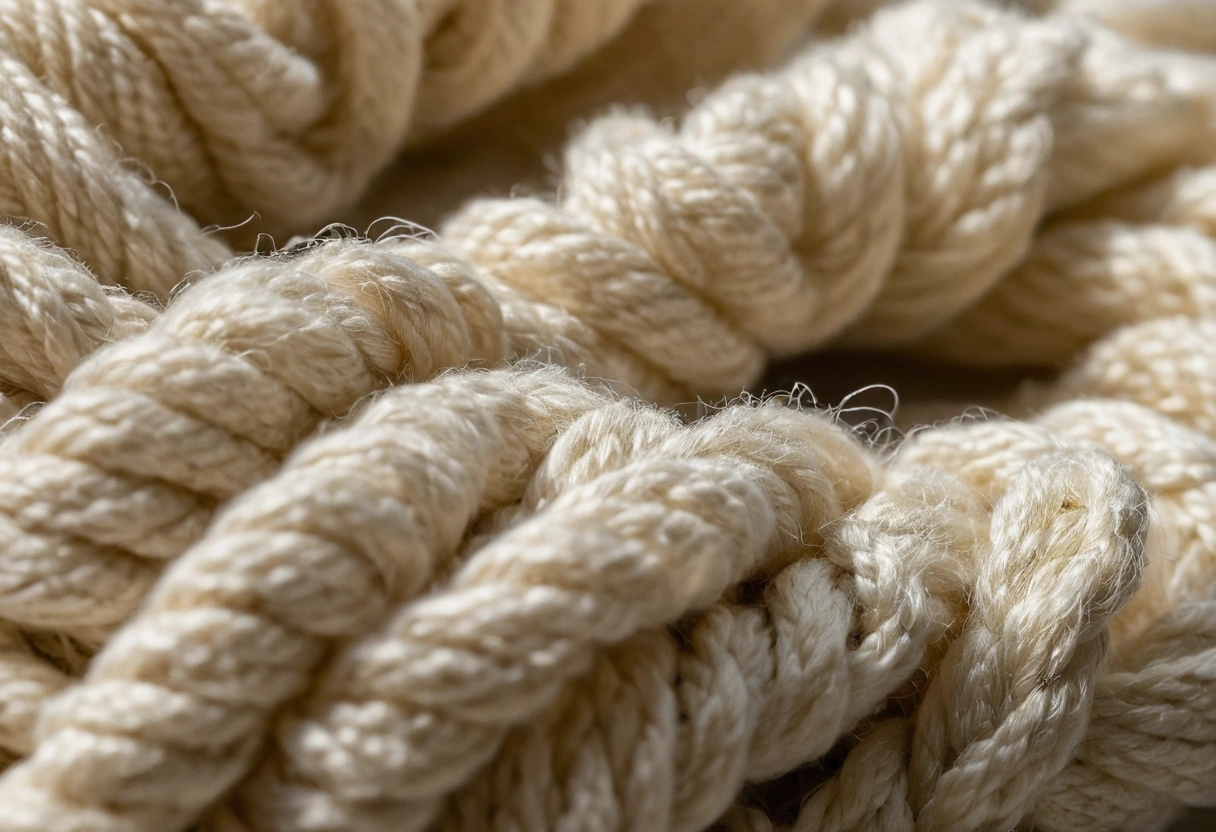
The questions that protect an upholstered commission are specific and slightly dull. A workshop building upholstered Italian furniture to last should answer them without reaching for a brochure. For the next stage of the brief, see About the Studio.
“Craft is a verb” was a good title because it described work rather than a look. On a real piece of furniture that argument becomes a cutting plan, a radius, a welt and a yardage figure. The fabric is never the last layer. It is the first decision, arriving last.